15 Minute Sushi Bowls | Jenna's Favorite Recipes

We enjoy sushi, but we don't always love how much it costs at a restaurant, or how complicated the process can be to make your own sushi rolls at home. Cue the deconstructed sushi bowl! All the flavor at a fraction of the price, and none of the time consuming effort. These bowls are based on a simple California Roll, with canned salmon swapped out for the imitation crab, but they're totally customizeable and can be made with any ingredients that you prefer. Just be careful if you decide

Ingredients

• 2 cups short grain white rice

• 2 cups chicken broth (optional)

• 8oz imitation crab, canned salmon or tuna

• 1 small cucumber

• 1 avocado

• 1 carrot or small package slaw mix

• 1 radish

• 1 package nori (dried seaweed)

• 1 Tbsp sesame seeds

• Soy sauce or coconut aminos (to taste)

• 4 Tbsp mayonaisse (optional)

• 2 Tbsp sriracha (optional)

Directions

1. Cook rice according to instructions. I suggest using chicken broth instead of water, as it makes the rice extra flavorful. (Once the rice is done cooking, you can make "sushi rice" by mixing it with a dressing of rice vinegar, sugar, and salt, but this extra step isn't necessary to enjoy this dish.)

2. While the rice cooks, prepare the toppings. Chop, grate, or slice the veggies and mix up the sriracha mayo, if using.

3. Once the rice has cooled a bit, scoop about 1 cup into the bowl.

4. Add desired toppings and sauces to taste.

5. Enjoy!

This recipe took inspiration from www.budgetbytes.com

The Bible In One Year | Reece's Peaces

The celebration of Easter is often seen as the climax of the church calendar, but this year, the Sunday after Easter marks the beginning of an ambitious and exciting new chapter for our congregation. We are embarking on a journey through the entire Bible in a single year. This initiative stems from many heartfelt conversations I have had with members of our community who have expressed a deep desire to understand how the various pieces of Scripture fit together. Many of us have wondered what is actually in the Bible, what is not, and how these ancient texts speak to our lives today. 

To address these questions, we are going to spend the next 52 weeks exploring the most pivotal stories in the biblical narrative. We will move chronologically from the opening chapters of Genesis to the final visions of Revelation. While it is impossible to cover every single passage in such a timeframe without keeping you in the pews 24/7, our goal is to provide a comprehensive overview. This bird's eye view will help you build a solid foundation for your own personal study and a clearer understanding of the grand arc of God's redemptive history. 

Our path will take us through some of the most dramatic moments ever recorded. We will witness Jacob wrestling with God in the dark of night and explore the chaotic era of the judges. We will stand with Solomon as he builds the magnificent temple and mourn during the tragic fall of Jerusalem. As we move into the New Testament, we will study the genealogy of Jesus to understand his heritage, witness the moment Jesus appeared to a doubting Thomas, and follow the radical conversion of Saul on the road to Damascus. We will eventually conclude our year with the profound imagery found in Revelation. 

 If you are curious about the specific schedule, a full list of the year’s sermons is available as a handout on the welcome table in the foyer. I have often heard people mention that they wish they knew more about the Bible but did not know where to start. This series is designed specifically for you. By the end of this year, you will possess a wealth of knowledge regarding the scriptures that anchor our faith. We look forward to seeing  you on April 12th as we begin this journey together. 


The Anthem of the Empty Tomb: Why We Cherish the "Alleluias" | Marc's Music Notables

As we journey through the final weeks of Lent and turn our hearts toward the dawn of Easter, a familiar melody begins to stir in our collective memory. It is a tune that carries the weight of history and the lightness of hope, a song we wait for with great anticipation. Of course, we are speaking of "Christ the Lord is Risen Today."

At Hurstbourne Christian Church, this hymn serves as more than just an opening hymn; it is a shared declaration of our faith. To prepare our hearts for the upcoming celebration, let’s look at the story behind these stanzas and why we reserve them specifically for Easter morning.

A Brief History: The Wesley Masterpiece

This beloved hymn was written by Charles Wesley in 1739, shortly after his own profound conversion experience. Originally titled "Hymn for Easter Day," it was first sung at the Foundery Meeting House in London.

Interestingly, Wesley’s original text did not include the famous "Alleluias." Those were added nearly a century later so the words would better fit the soaring, rhythmic tune we know today, titled Lyra Davidica. While Wesley provided the deep theology, the "Alleluias" provided the breath and spirit that make the hymn so iconic.

The Theology of Joy

What makes this hymn so significant is its move from historical storytelling to personal invitation. It doesn't just look back at an empty tomb; it invites us to participate in the victory. Wesley uses active, communal language:

"Raise your joys and triumphs high" 

"Sing, ye heavens, and earth reply"


The hymn reminds us that because Christ "burst the gates of hell," our own journey is forever changed. It is a poetic bridge between the event of the Resurrection and our lives today.

Why We Save This Song for Easter

You may notice that we don’t sing this hymn during the rest of the year. This isn't by accident; it is a purposeful choice rooted in our liturgical tradition. During the season of Lent, many churches practice a "holy restraint." We focus on reflection, repentance, and the gravity of the walk toward the Cross. By setting aside our most triumphant hymns, and the word "Alleluia" itself, we create a space for spiritual longing.

The Significance of the Wait:

· A Meaningful Contrast: After the quiet shadows of Good Friday, the first notes of this hymn on Easter Sunday signal a definitive change in the season.

· Preserving the Sacred: By singing it only once a year, we ensure the hymn remains a "mountain-top" experience, keeping its power and message fresh.

· A Shared Milestone: It serves as a musical marker that the Lenten fast has ended and the Easter feast has begun.

“Love's redeeming work is done, Fought the fight, the battle won."


When we stand together this April 5th to lift our voices, remember that you are joining a centuries-old tradition of believers who have found hope in these same words. We have waited through the wilderness of Lent, and now, we finally get to share the song we’ve been holding in our hearts. We look forward to sharing this beautiful moment of worship with you all as we celebrate the resurrection of Christ and raise our “alleluias” in praise!


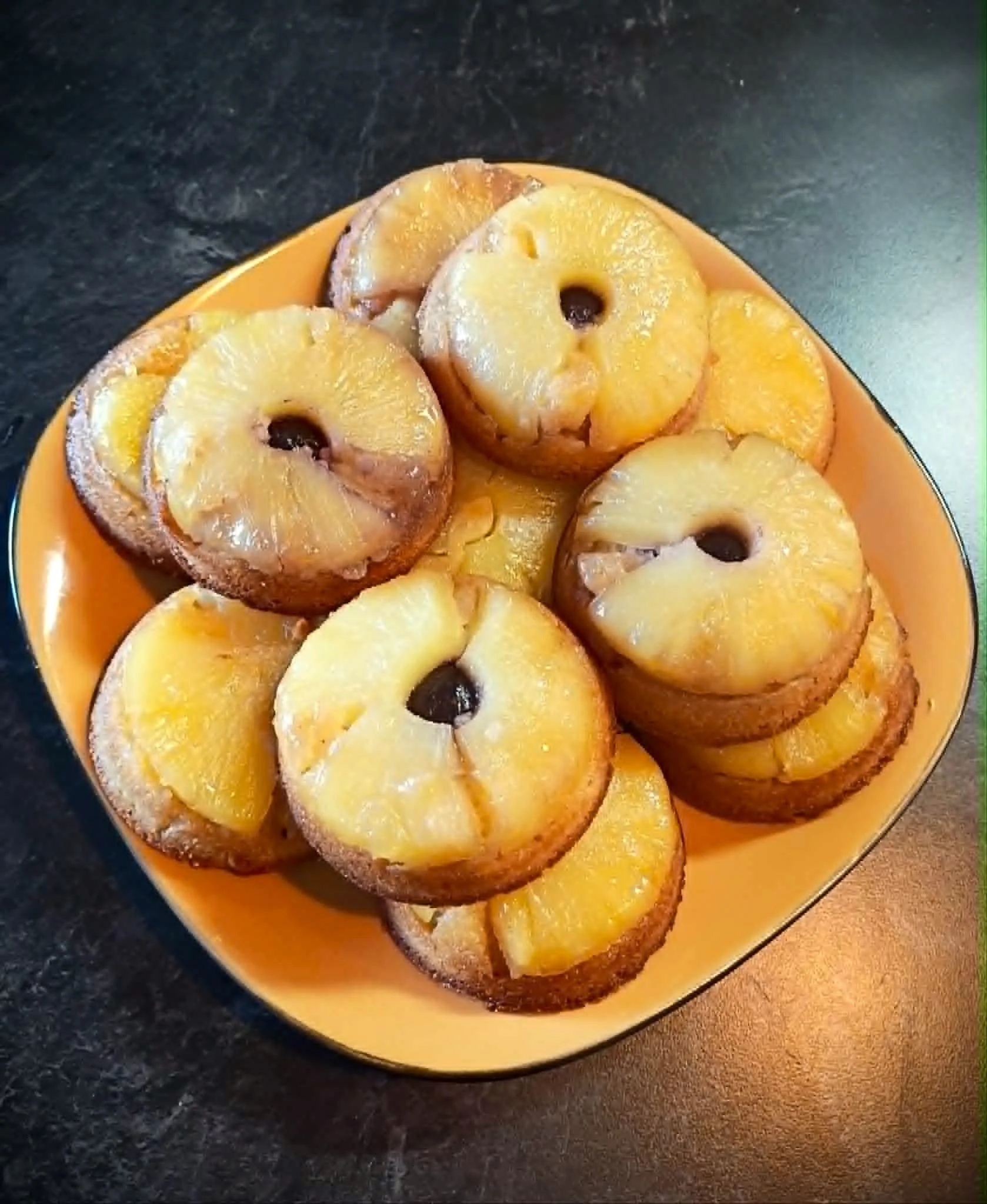
Mini Pineapple Upside Down Cakes | Jenna's Favorite Recipes

These miniature cakes are the perfect way to bring some extra sunshine to your Easter     gatherings, and you don’t even need a knife to serve them!

Topping:

· 1/4 cup melted butter

· 1/3 cup brown, maple, or coconut sugar

· 1 can pineapple rings

· Cherries (optional)

Cakes:

· 1 & 1/4 cup flour of choice (I use a mix of almond and measure for measure gluten free flours)

· 1 tsp baking powder

· 1/4 tsp salt

· 1/4 cup (half a stick) of butter, softened

· 1/3 cup brown, maple, or coconut sugar

· 1/3 cup raw sugar, stevia, or other sweetener

· 1 large egg (at room temperature)

· 1 tsp vanilla extract

· 1/4 cup milk or cream

· 1/4 cup pineapple juice (reserved from can)

 Directions:

1.  Grease a 12-count muffin tin.

2.  Make the topping: melt the butter and sugar in a small saucepan on medium low heat. Mix until smooth.

3.  Evenly distribute topping between all muffin tins, then add a pineapple ring to each (you may need to cut out a piece and reshape them to fit). Add the cherries, if using.

4.  To make the cake batter, mix together the flour, baking powder and salt.

5.  In a larger bowl, beat the butter until smooth, then add the sugar and mix until it’s light and fluffy.

6.  Add the egg and vanilla, then mix until thoroughly combined. 

7.  Mix in half of the dry mixture, then the milk and pineapple juice. Add the last half of the dry   mixture, and mix until just combined. Don’t overmix the batter.

8.  Distribute the batter between the muffin tins, then bake at 350 for 20-25 minutes, until a toothpick inserted in the center comes out clean.

9.  Let cool for 5-10 minutes. Then slide a knife around the outer rim of each cake to loosen from the pan. Place a wire rack over the muffin pan, then carefully flip the rack and pan over together. (Be sure to use oven mitts!) Gently lift the muffin pan off the cakes.

10.  Let them cool completely, then serve and enjoy!


 This recipe took inspiration from livewellbakeoften.com


March Madness | Reece's Peaces

In the Commonwealth of Kentucky, March is never just March. It is a season of brackets,  buzzer-beaters, and bold predictions. Whether you bleed blue for the University of Kentucky, cheer for the Cards at the University of Louisville, shout “Hilltoppers!” for Western Kentucky University, or faithfully follow another beloved program, this time of year has a rhythm all its own. The NCAA Division I Men's Basketball Tournament becomes more than a competition.  It becomes a shared experience that unites families, coworkers, churches, and even friendly  rivals in the pews. 

And yet, for the Church, March also carries another rhythm. It is the season of Lent. 

At first glance, March Madness and Lent could not be more different. One is loud, fast, and unpredictable. The other is quiet, reflective, and intentional. One fills our living rooms with cheers. The other invites us into prayer. But perhaps they have more in common than we think. 

Every year, fans fill out brackets with hope. We study the matchups. We analyze strengths and weaknesses. We dare to believe that this could be the year. There is anticipation in the air. Lent carries its own kind of anticipation. We examine our hearts. We take honest stock of our strengths and weaknesses. We commit to practices that shape us. We dare to believe that God is not finished with us yet. 

In basketball, teams talk about discipline. It is not the flashiest part of the game, but it wins championships. Good shot selection. Strong defense. Smart decisions under pressure. In Lent, we practice spiritual discipline. Prayer. Fasting. Generosity. Repentance. These are not flashy acts. They rarely trend on social media. But they shape champions of the soul. 

And of course, March Madness reminds us that upsets happen. The unexpected team rises. The favored giant falls. In our spiritual lives, Lent reminds us that God specializes in holy upsets. Pride gives way to humility. Despair gives way to hope. Death gives way to resurrection. 

 So as you gather with friends to watch the games, as you text about brackets and celebrate  victories, consider this: What if this season is not only about who advances to the Final Four, but about who we are becoming along the way? 

Cheer loudly. Enjoy the games. Wear your colors proudly. 

But also lean into the deeper work of Lent. Because long after the nets are cut down, the transformation God is shaping in us will endure.